
Iberian Ham vs Italian Prosciutto
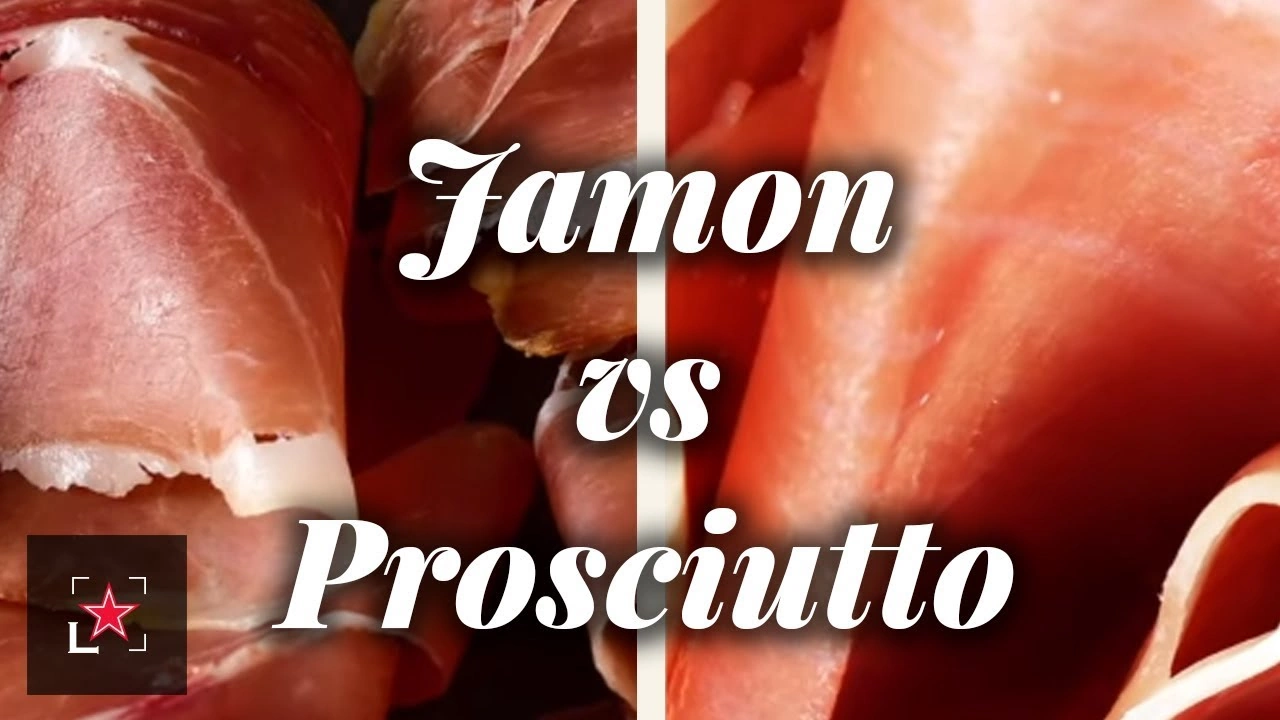
Iberian ham and Italian prosciutto are two of the world's most prestigious cured meats, each with a rich history and a distinctive flavor that reflects its origin and production process. While both share excellence as a common denominator, the differences between Iberian ham and Italian prosciutto are notable and deserve to be explored by food lovers.
🛒 Unique aroma and bouquet straight from the winery!
Buy Iberian acorn-fed ham from Huelva
Experience the noblest profile of the montanera: fine slices with a penetrating aroma, notes of dried fruit and a honeyed touch that conquers the palate.

Origin and breed of the pig
One of the fundamental differences between Iberian ham and Italian prosciutto lies in the breed of pig they come from. Iberian ham is made exclusively from the Iberian pig , a native breed of the Iberian Peninsula, known for its unique ability to infiltrate fat into the muscle , which gives it its characteristic marbling and a deep, lingering flavor.
In contrast, Italian prosciutto is generally produced from white breed pigs , with less intramuscular fat infiltration , resulting in leaner meat with a more delicate flavor.
Feeding and raising
The diet and rearing system of the pigs are crucial factors that distinguish Iberian ham from Italian prosciutto. In Spain, especially in the case of acorn-fed Iberian ham, Iberian pigs are raised free-range in the dehesa (pastureland), feeding on acorns during the montanera (autumn and winter). This natural diet, rich in oleic acid , and the animals' constant exercise give Iberian ham unique nuances: sweet notes, umami, and an unmistakable aroma.
On the other hand, pigs destined for the production of Italian prosciutto are usually raised on farms and fed with cereals and whey . Although this diet also influences the flavor, it is less complex and varied than an acorn-based diet.
Healing process
The salting and curing process is another significant difference between Iberian ham and Italian prosciutto. Iberian ham undergoes a curing process that can last between 24 and 48 months , depending on the quality (grain-fed, free-range, acorn-fed). The salting period is relatively short, followed by a slow drying process in natural drying sheds and cellars, where the climatic conditions and the native microbial flora play a fundamental role in the development of its flavor and aroma.
Italian prosciutto, on the other hand, is cured for a period ranging from 12 to 24 months . The salting process is usually longer than with Iberian prosciutto, and the curing environment is more controlled, with fewer climatic variations.
Taste and texture
Differences in breed, diet, and curing process result in distinct flavor profiles and textures between Iberian ham and Italian prosciutto. Iberian ham is characterized by its intense, complex, and persistent flavor, with notes that vary depending on the pig's diet (acorn-fed, pasture-raised, grain-fed). Its texture is smooth, unctuous, and melts in the mouth thanks to its fat marbling.
Italian prosciutto, on the other hand, has a more delicate, sweet and slightly salty flavor, with a firmer texture and less intramuscular fat.
Price and perception
The price also reflects the differences between Iberian ham and Italian prosciutto. Generally, Iberian ham, especially acorn-fed Iberian ham, tends to be more expensive due to the exclusivity of the breed, the free-range rearing system, and the long curing process.
Italian prosciutto, although also a high-quality product, is usually more affordable.

Get the Highest Quality Iberian Direct from the Cellar
Conclusion: Two Charcuterie Gems with Their Own Personality
When comparing Iberian ham to Italian prosciutto, there's no clear winner. Both are exceptional products that represent the tradition and mastery of their respective culinary cultures. The differences in pig breed, diet, curing process, flavor, and texture offer unique sensory experiences. The choice between the two will depend on personal taste, the occasion, and the desired pairing. The important thing is to appreciate the uniqueness of each and enjoy the richness they bring to the world of high-quality charcuterie.


