
Why is it important to slice Iberian ham correctly?
- Tips and Tricks
Indice
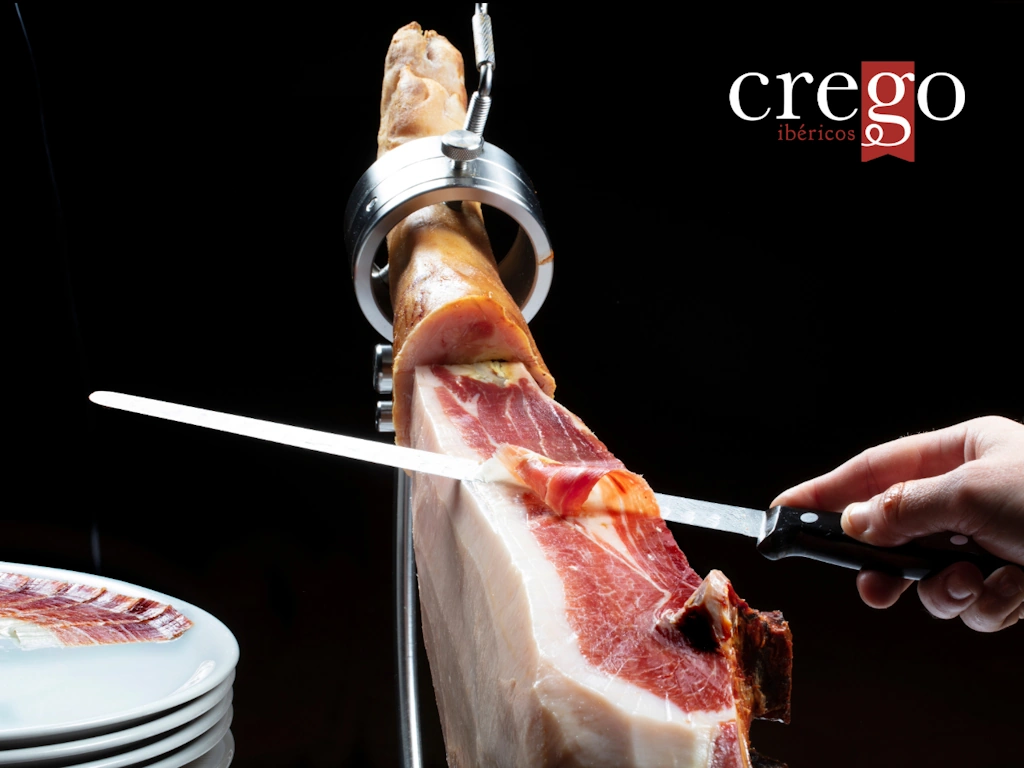
How to Properly Carve an Ibérico Ham
Ibérico ham is a jewel of Spanish gastronomy, but enjoying it fully requires more than just buying a good piece. According to Abel Saavedra, president of the National School of Ham Carvers, the most common error that ruins this product is not respecting the carving and presentation technique, which directly alters the flavor and juiciness of the meat.
The Main Mistake: Inadequate Carving
Many consumers make the mistake of cutting slices that are too thick or irregular. Saavedra explains that the secret lies in achieving a slice that is thin yet has body, about 2.5 centimeters wide. This specific thickness is vital because it allows the aromas to be released gradually while chewing, enhancing the sensory experience. If the slice is too thick, the texture becomes coarse and the flavor is not perceived with the same intensity.
Keys to Choosing and Carving Like a Professional
To avoid ruining the experience, the process begins before using the knife:
- The Choice: A good ham must have optimal curing and high-quality, uniform, and sufficient fat. Fat is what carries the flavor; without it, the Ibérico loses its essence.
- The Tools: Professionals use specific knives, sometimes with small indentations (dimples) that prevent the fat from sticking to the blade, allowing for cleaner cuts.
- Plating: Aesthetics also matter. It is no longer enough to just pile the ham up; placing the slices carefully makes the dish visually attractive and easier to consume.
Storage: The Great Challenge at Home
Another serious mistake occurs once the piece is opened. The master advises consuming the ham within a maximum period of one and a half months. After this time, the meat begins to dry out excessively and loses its organoleptic properties.
To keep it in perfect condition, Saavedra suggests simple tricks:
- Use its own fat: Cover the cutting area with a thin slice of the white fat removed when opening it. This acts as a natural “seal” that prevents oxidation.
- Plastic wrap: If it is not going to be consumed soon, it can be covered with plastic film, making sure to squeeze out the air so there is no direct contact with oxygen.
- External protection: Place a clean cloth on top to protect the piece from light and sudden temperature changes.
Total Utilization
Finally, the expert emphasizes that a good carver must know how to use 100% of the piece. Trimmings that are not suitable for perfect slices can be integrated into other dishes or consumed as cubes (tacos).
In summary, ruining an Ibérico ham is easy if carving or storage is neglected, but by following these simple guidelines—sharp knife, thin slices, and protection with its own fat—you can enjoy its full potential down to the last sliver. The key is to treat the ham not just as food, but as an art that requires patience and respect for the product.
Nota importante: aceitedelcampo.com promueve el consumo del aceite de oliva virgen extra por sus cualidades culinarias y beneficios para la salud. No obstante, no debe sustituirse ningún medicamento o tratamiento actual sin la orientación de un profesional de la salud.
Productos que te pueden interesar
9,50 € – 165,00 €Price range: 9,50 € through 165,00 €
7,49 € – 165,00 €Price range: 7,49 € through 165,00 €
16,50 € – 320,00 €Price range: 16,50 € through 320,00 €